Savings
Why the Same Prescription Can Cost $12 at One Pharmacy and $80 at Another
By Pocket Rx Team · Jun 4, 2026 · 2 min read
Prescription prices aren't regulated like utilities — each pharmacy sets its own cash price. Here's why the spread is so wide, and how to make it work for you.
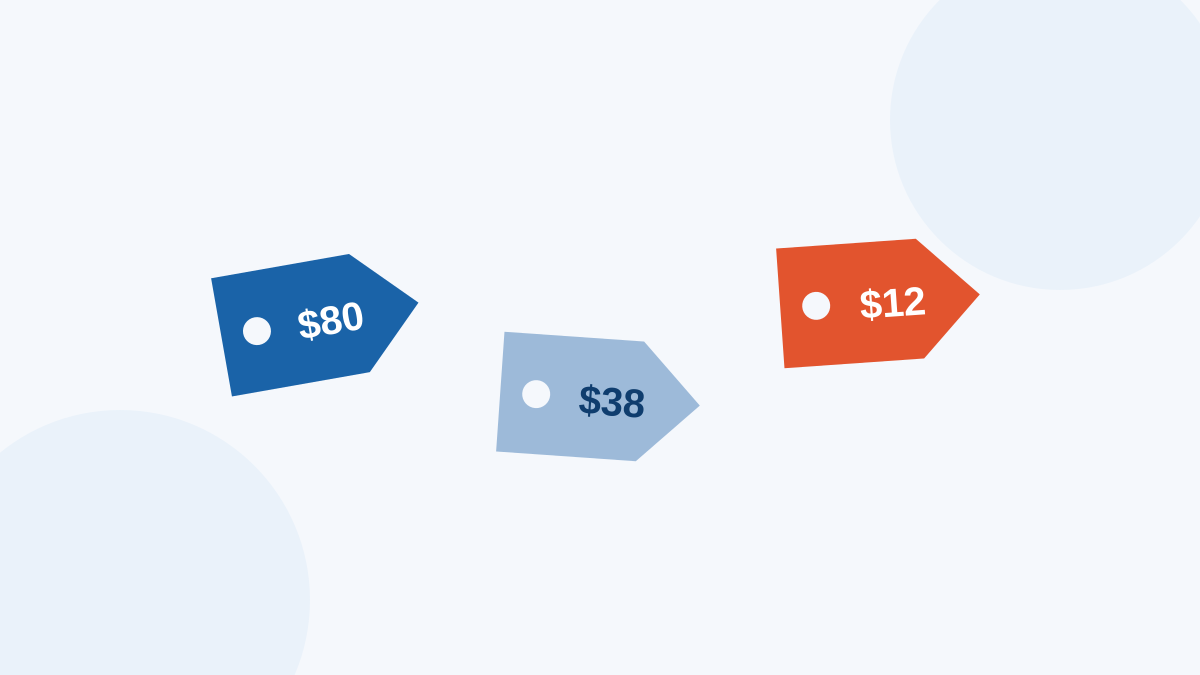
Call three pharmacies in the same zip code and ask the cash price of a common generic, and you can get three numbers that look like they're for three different drugs. That spread isn't an error — it's how the market works.
Every pharmacy sets its own cash price
There is no standard retail price for a prescription. Each pharmacy chooses its "usual and customary" price based on its costs, its strategy, and what the market bears. A big-box store may treat the pharmacy as a way to get you in the door and price generics aggressively; an independent shop with one location has different economics; a 24-hour chain pharmacy charges for convenience.
The list price isn't what most people pay
Behind the counter, nearly every transaction is repriced by a middle layer — insurance plans and pharmacy benefit networks that negotiate their own rates with each pharmacy. The same bottle can have a cash price, several insurance prices, and several discount-network prices, all different. Which one you pay depends entirely on what gets typed into the register.
Why generics have the wildest spreads
Once a drug loses patent protection and several manufacturers compete, the wholesale cost of the pills can fall to pennies. At that point the retail price is almost pure markup, and markup policy is where pharmacies differ most. An $80 generic at one counter and $12 at another are often the exact same product from the exact same manufacturer.
How to use this instead of being used by it
- Compare before you fill. Prices vary enough that a five-minute check can outweigh a month of coupon-clipping elsewhere in your budget.
- Run a discount card. A network-negotiated price replaces the pharmacy's cash price and removes most of the location lottery.
- Ask about 90-day fills. Per-pill prices usually drop on larger quantities, and you save two trips.
- Don't assume your usual pharmacy is competitive. Loyalty is worth something, but it's worth knowing how much you're paying for it.
Prescriptions are one of the few things we buy without seeing the price first. Asking — and having a second price in your pocket — turns it back into a normal purchase.
Put it into practice — get your free card
One email. No account, no fees, no expiration. Accepted at 35,000+ pharmacies.