Savings
How Prescription Discount Cards Work — and When to Use One
By Pocket Rx Team · Jun 18, 2026 · 2 min read
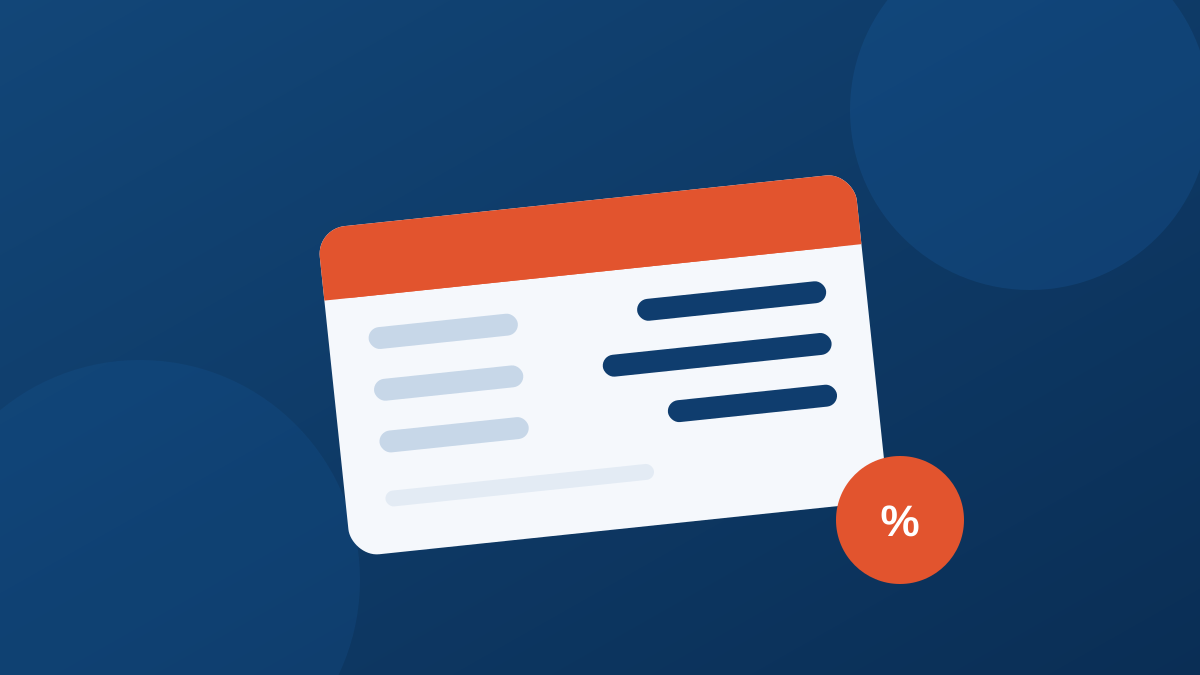
Those four numbers on your card — BIN, PCN, Group, and Member ID — unlock pre-negotiated prices at the pharmacy counter. Here's what actually happens when the pharmacist scans them.
Prescription discount cards can feel too good to be true: a free card, no signup, and the price of a generic drops by half or more. But there's no catch hiding in the fine print — just a part of the pharmacy system most people never see.
The numbers on the card do the work
Every discount card carries four identifiers: an RxBIN, RxPCN, RxGRP, and Member ID. When your pharmacist types them in, the register routes your prescription through a pharmacy benefit network — the same rails your insurance claim would travel — and returns a pre-negotiated price instead of the pharmacy's cash price.
That negotiated price exists because the network processes millions of prescriptions and has agreed on rates with pharmacies in advance. You're essentially borrowing group buying power, no membership required.
When a discount card beats your usual price
- You don't have insurance. The card price is almost always far below the walk-in cash price.
- Your plan has a high deductible. Until you hit the deductible, you may be paying the full negotiated insurance rate — a discount price can undercut it.
- The drug isn't covered. Formularies leave gaps, especially for newer generics or unusual doses.
- Your copay is just high. For many common generics, the discount price beats a $10–$25 copay outright.
One card or the other — not both
A pharmacy processes each fill through one payer, so you can't stack a discount card on top of your insurance copay. The good news: you can choose per prescription, and switch every time you fill. Ask the pharmacist to run it both ways and pick the lower number.
One trade-off to know: when you pay with a discount card instead of insurance, the amount usually doesn't count toward your deductible. If you're close to hitting it, the insurance price may be worth more to you than the saving.
Using your card is a ten-second conversation
Show the card from your email, the PDF, or your phone's wallet and say: "Can you run this discount card, and tell me if it beats my current price?" Pharmacists do this constantly — no explanation needed. The same card works for every member of your household, and even for pet medications filled at a human pharmacy.
If the discounted price wins, that's it. You pay less, and the card never expires.
Put it into practice — get your free card
One email. No account, no fees, no expiration. Accepted at 35,000+ pharmacies.