Medications
Generic vs. Brand-Name Drugs: What's Actually Different?
By Pocket Rx Team · May 28, 2026 · 2 min read
Generics must contain the same active ingredient, strength, and dosage form as the brand — so why is the price sometimes 90% lower? A plain-English explainer.
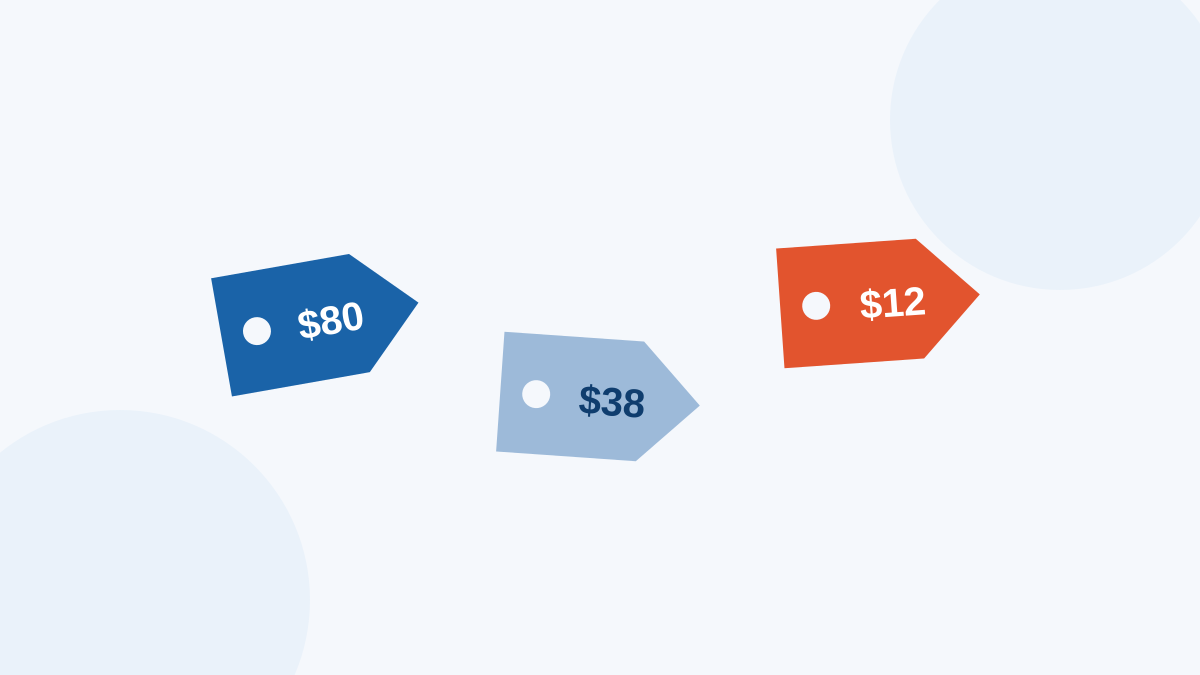
Switching to a generic can cut a prescription's price by 80–90%, which naturally makes people suspicious. If it's that much cheaper, is it really the same medicine?
What the FDA requires of a generic
To be approved, a generic must match the brand-name drug's active ingredient, strength, dosage form, and route of administration, and it must demonstrate bioequivalence — meaning it delivers the same amount of medicine into your bloodstream over the same time, within tight statistical limits. Generic manufacturing sites are held to the same quality standards as brand facilities, and are inspected by the same agency.
What's allowed to differ
- Inactive ingredients. Fillers, dyes, and coatings can vary, which is why a generic may look different or, rarely, disagree with someone who has a sensitivity to a specific filler.
- Appearance. Trademark law actually requires generics to look different from the brand.
- Price. This is the big one — and it has nothing to do with quality.
Why the price gap is so large
A brand-name drug's price reflects years of research, trials, and a patent-protected period with no competition. When the patent expires, other manufacturers can produce the same molecule without repeating that investment. Once several generic makers compete, the price falls toward the cost of manufacturing — often pennies per pill.
When brand-name still makes sense
For a small set of medications — those with a narrow therapeutic index, where small blood-level differences matter — some prescribers prefer to keep patients on one consistent product. And occasionally a patient tolerates one version better than another. These are conversations for your prescriber, not reasons to avoid generics broadly.
The practical takeaway
If your prescription is for a brand-name drug, it costs nothing to ask two questions: "Is there a generic?" and "Is it appropriate for me?" If the answer is yes, you're getting the same active medicine — and with a discount card, generic prices are where the savings get dramatic.
This article is for general information and isn't medical advice. Talk to your prescriber or pharmacist about your specific medications.
Put it into practice — get your free card
One email. No account, no fees, no expiration. Accepted at 35,000+ pharmacies.