Insurance
Discount Card or Insurance Copay? How to Pay Less at Pickup
By Pocket Rx Team · Jun 11, 2026 · 2 min read
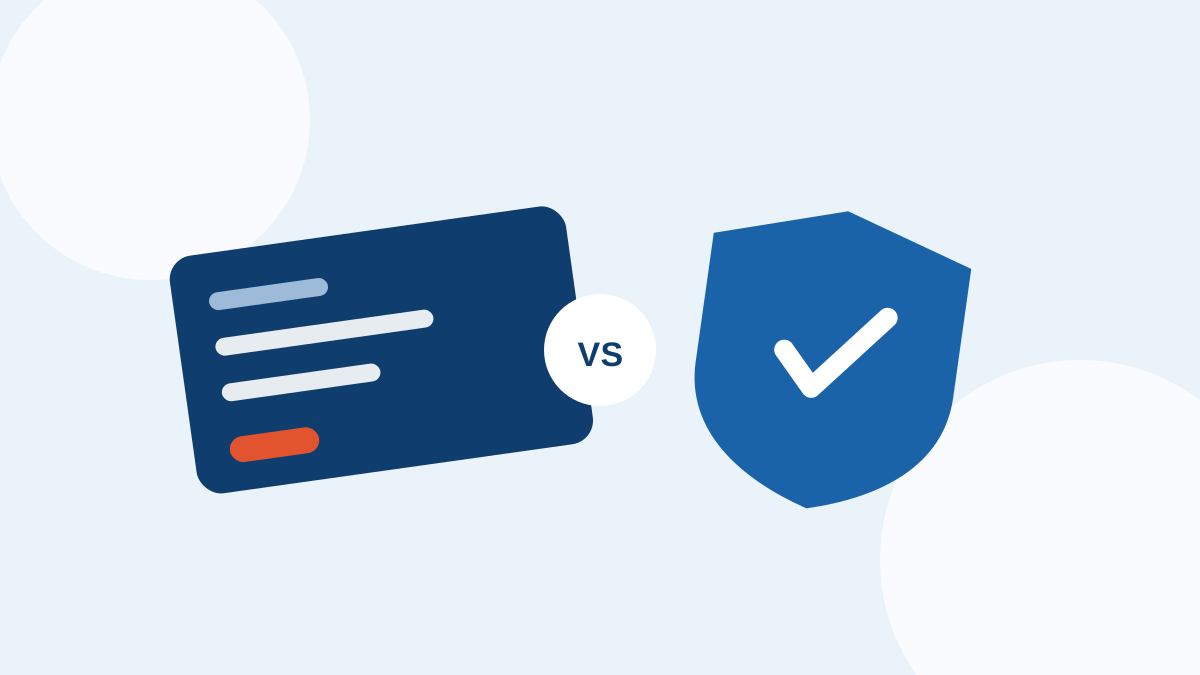
You can only use one per fill — but you get to choose every time. A quick way to decide which will cost you less, and the deductible caveat to keep in mind.
At the pharmacy counter you often have two prices available for the same bottle of pills: your insurance price and a discount card price. Most people never ask about the second one.
The one-question habit
Before you pay, ask: "Is there a lower price if you run this discount card instead of my insurance?" The pharmacist can process the claim both ways and quote you both numbers in under a minute. There's no penalty for asking, and no commitment — the choice resets with every fill.
When insurance usually wins
- You've met your deductible. Once cost-sharing kicks in, copays on covered drugs are often hard to beat.
- It's an expensive brand-name drug. Insurance negotiates hardest on costly medications; discount networks shine brightest on generics.
- You're close to your out-of-pocket maximum. Every insured fill moves you toward the cap; discount-card purchases don't.
When the discount card usually wins
- High-deductible plan, early in the year. Before the deductible, you're often paying the plan's full negotiated rate.
- Common generics. Blood pressure, cholesterol, thyroid, antibiotics — discount prices on these are frequently below typical copays.
- Non-covered drugs and doses. If your plan says no, the discount price applies to everything the network covers.
The deductible fine print
Paying with a discount card generally does not count toward your insurance deductible or out-of-pocket maximum, because your plan never sees the claim. If you expect major medical costs later in the year, factor that in — a few dollars saved in March could cost you more in November. If your year looks light on medical spending, take the lower price every time.
You can still use HSA and FSA money
Prescriptions paid with a discount card are still qualified medical expenses, so your HSA or FSA card works at the register. Keep the receipt like you would for any other eligible purchase.
The bottom line: the lowest price isn't fixed — it changes by drug, pharmacy, and time of year. Carrying a free discount card in your wallet means you always have a second bid.
Put it into practice — get your free card
One email. No account, no fees, no expiration. Accepted at 35,000+ pharmacies.